
On this page
Phase 1: The Foundation of Value
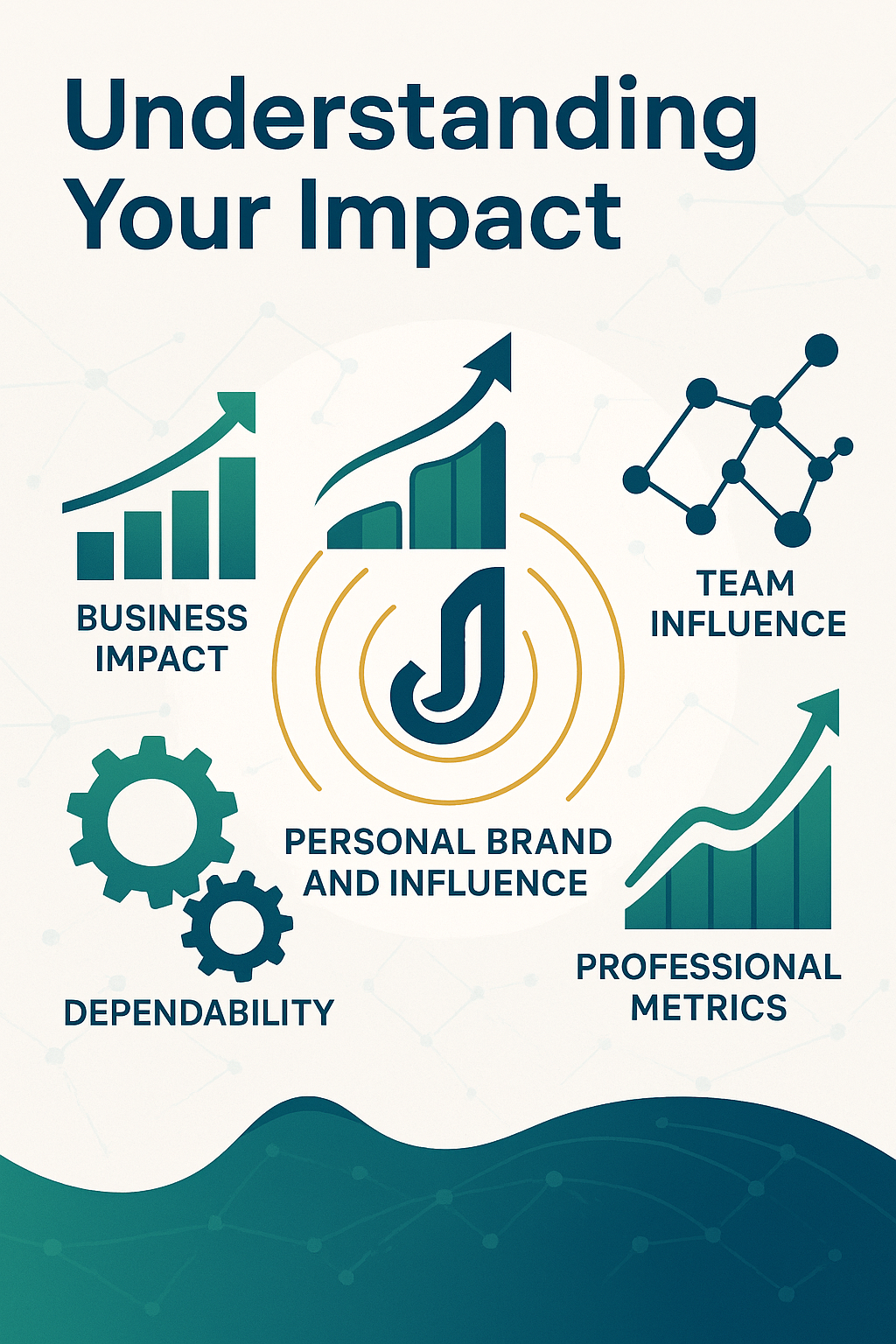
Business Impact, Professional Metrics, and Personal Style
In the high-stakes environments of companies like Apple, Netflix, and Workday, “impact” isn’t a vague feeling of productivity; it is a measurable, architectural reality. As a CEO and DevOps professional, I view every line of code and every infrastructure decision through a dual lens: technical excellence and fiscal responsibility.
The Strategic Intersection: Where Code Meets the Bottom Line
Most organizations fall into the trap of viewing DevOps as a cost center—a necessary overhead to keep the lights on. At Thought Parameters LLC, we reject this “maintenance-only” mindset. We view infrastructure as a value multiplier.
When we speak about Business Impact, we are discussing the direct correlation between technical precision and corporate health. A “Move Fast and Break Things” mentality might generate short-term velocity, but it inevitably leads to a mountain of technical debt and unpredicted outages. In contrast, our approach of Defined Code ensures that every resource is intentionally provisioned.
The Precision Premium: By utilizing Terraform and Kubernetes to standardize environments, we eliminate configuration drift. This isn’t just a technical win; it’s a financial one. It reduces the time-to-market for new features and slashes the “troubleshooting tax” that eats into engineering budgets.
Redefining Professional Metrics: From KPIs to Outcomes
Standard industry KPIs often focus on volume: How many tickets were closed? How many deployments happened this week? While these are easy to track, they often mask the true health of a system.
To understand your true impact, you must look at Professional Metrics that reflect stability and scalability:
Mean Time to Recovery (MTTR): Not just how fast you fixed it, but how your automation prevented it from being a manual fire drill.
Change Failure Rate: A testament to your peer review and testing rigor.
Cost per Provisioned Unit: The ultimate CEO metric, proving that your infrastructure is optimized for growth, not just existence.
As Dr. Nicole Forsgren demonstrates in her DORA research, high-performing teams don’t just work faster; they work with higher stability. Impact is found in the delta between a system that survives and a system that thrives.
Personal Style: The Signature of Excellence
In the DevOps world, Personal Style is often overlooked, yet it is the primary driver of your personal brand. My style is rooted in simplicity and transparency. There is a certain beauty in a workflow that is so clean it requires no explanation—a system that others in the industry look at with a sense of professional envy.
A professional’s “style” should be their hallmark. When I architected automated GCP environments, my goal was to create a “golden path” for developers. That intentionality—making the right way the easiest way—is a personal signature that defines your influence within a team.
Our Approach vs. The Industry Standard
The “Industry Standard” often prioritizes the Hero Culture—the engineer who stays up until 3 AM to fix a production outage.
Our approach is different. We believe that if you have to be a hero, your system has failed. We prioritize:
Intentional Provisioning over Ad-hoc Growth: Every asset has a purpose and a lifecycle.
Defined Code over Manual Tweaks: If it isn’t in version control, it doesn’t exist.
Auditable Transparency over Tribal Knowledge: Your impact should be visible in the documentation and the automation, not just in your head.
By codifying our precision, we create Infinite Capacity. This allows a business to scale without a linear increase in headcount or stress, providing a level of reliability that becomes the foundation for all other forms of impact.
Phase 2: The Infrastructure of Trust – Reliability and Dependability
In the world of SRE and Infrastructure Engineering, the most profound impact is often silent. It is the outage that never happened, the data that remained secure, and the system that scaled seamlessly during a traffic spike. At companies like Fidelity Life Association and Netflix, Reliability and Dependability aren’t just technical goals—they are the bedrock of customer trust.
The Silent Value of High Availability
For a DevOps professional, reliability is the ultimate currency. While Phase 1 focused on the visible metrics of business impact, Phase 2 is about the “unseen” work that prevents catastrophic failure. We don’t just build systems that work; we build systems that are resilient by design.
In my experience, true reliability is achieved when we stop treating infrastructure as a collection of static servers and start treating it as a dynamic, self-healing organism. By standardizing configuration management with tools like Ansible and Puppet Enterprise, we replace the fragility of manual “quick fixes” with auditable, version-controlled automation. This ensures that the system’s state is always known, predictable, and reproducible.
Reliability vs. Features: There is a common tension in tech between shipping new features and maintaining system stability. Our approach is to embed stability into the delivery pipeline. By aligning release readiness with automated CIS-benchmarked hardening, we ensure that every new feature is as dependable as the foundation it sits on.
Dependability as a Professional Brand
Dependability is the human side of reliability. In a high-velocity environment, being the “dependable engineer” means that your stakeholders—from the CEO to the junior developer—know that your systems are built with intentionality.
When I led DevOps delivery for parallel product teams at Fidelity, my impact was rooted in reducing “delivery friction.” By removing blockers and prioritizing reliability from the design phase through to production, I created an environment where the team could depend on the pipeline. When the pipeline is dependable, the team’s velocity increases because they are no longer afraid to deploy.
Why the “SRE Mindset” is Superior to “SysAdmin” Traditionalism
The traditional approach to system administration often relied on “tribal knowledge” and manual intervention—the “Hero Culture” we touched on in Phase 1. Our approach is superior because it shifts the burden of dependability from the individual to the system.
Observability over Monitoring: Traditional monitoring tells you when something is broken. Our observability stack—strengthened through documented runbooks and Nginx log analysis—tells us why it might break before it actually does.
Immutable Infrastructure: We don’t “patch” live servers in a way that creates drift. We rebuild and redeploy. This makes the system inherently more dependable because the environment in production is an exact mirror of the environment that was tested.
Peer Review and Peer Trust: By partnering with Security and Engineering to embed security-by-design into every change, we create a culture of mutual dependability. Peer review isn’t a hurdle; it’s a safety net.
The Reliability Ripple Effect
When you achieve a state of high reliability, you unlock the ability to innovate. As Liz Rice often highlights in her work on cloud-native security and infrastructure, a secure and reliable foundation is what allows an organization to take calculated risks. If the infrastructure is brittle, the business is stagnant. If the infrastructure is dependable, the business has Infinite Capacity to grow.
By focusing on these “silent” pillars, you aren’t just an engineer; you are a guardian of the company’s reputation. Your impact is found in the consistency of the service and the peace of mind of your team.
Phase 3: The Ripple Effect – Team Influence, Professional Development, and Influence
In the evolution of a career, there comes a moment where your individual technical output—no matter how precise—is no longer the primary measure of your impact. True impact shifts from what you can do personally to how much you can empower others to achieve. This is the stage of the Force Multiplier. At places like Apple and David’s Bridal, I realized that the most durable systems aren’t just built with code; they are built with people.
Becoming a Force Multiplier
In DevOps, we often talk about “scaling infrastructure,” but we rarely talk about “scaling expertise.” Team Influence is the process of taking the “Defined Code” and “Precision” mindsets and embedding them into the team’s DNA.
When I mentored junior engineers at David’s Bridal on Nginx and infrastructure automation, the goal wasn’t just to teach them a tool. It was to instill a standard of excellence. By creating documented runbooks and repeatable practices, I ensured that my “impact” continued to felt even when I wasn’t in the room. This is how you move from being a bottleneck to becoming a catalyst.
The Influence Equation: $Impact = (Technical Excellence) \times (Number of People Empowered)$. If you are an expert who doesn’t share knowledge, your impact is limited to your own 40 hours a week. If you mentor a team of five, your impact is effectively quintupled.
Professional Development: Leading by Example
Your own Professional Development should never happen in a vacuum. To have a real impact, your growth should serve as a blueprint for those around you. When I pursued advanced certifications or mastered new cloud architectures in GCP, I made it a point to bring those insights back to the collective.
Influence is earned through transparency and humility. The most influential leaders in our field—people like Kelsey Hightower—don’t lead by mandate; they lead by demonstrating a better way to work. They make complexity look simple, and in doing so, they inspire others to simplify their own work. This “Personal Style” of leadership creates a culture where everyone is striving for that same level of “envied” simplicity.
The Art of Strategic Influence
Influence in a corporate setting is often about bridging the gap between departments. My role as a DevSecOps professional frequently required me to partner with Security and Engineering teams to embed security-by-design.
This required a specific type of influence: Empathy-driven Engineering.
Aligning Incentives: I didn’t just tell developers to “be more secure.” I showed them how automated security checks would actually reduce their peer-review time and prevent late-stage blockers.
Reducing Friction: I focused on removing the “hard work” for them. If security is easy to do, people will do it.
Building Consensus: By leading Agile ceremonies and aligning Release Readiness, I ensured that everyone felt ownership of the final product.
Why Mentorship-Led Growth is Superior
The standard corporate approach to growth is often “every man for himself,” where engineers hoard knowledge to maintain job security. Our approach is the opposite. We believe that Social Responsibility begins within your own team.
Documentation as a Gift: We don’t document just for compliance; we document so the next person doesn’t have to struggle the way we did.
Standardization as Freedom: By standardizing workflows, we give the team the freedom to focus on creative problem-solving rather than mundane configuration.
Growth through Feedback: High-quality peer reviews aren’t about finding mistakes; they are about elevating the entire team’s standard of “Personal Style.”
When you focus on the growth of others, you are building a legacy. Your impact is no longer tied to a specific server or a single project—it is woven into the careers of every person you’ve influenced.